FACTOID # 4: In the 1990's, nearly half of all arms exported to developing countries came from the United States of America.
 
 Home   Encyclopedia   Statistics   Countries A-Z   Flags   Maps   Education   Forum   FAQ   About 


WHAT'S NEW
 

SEARCH ALL

FACTS & STATISTICS   

Search encyclopedia, statistics and forums:


(* = Graphable)


Asia > Georgia > Military

GEORGIAN MILITARY STATS:   Top Stats   All Stats  
View this page with:    Just Stats   Sources   Definitions   Both  
Armed forces personnel 27,000 [88th of 166]
Conscription
Conscription exists (FWCC).
Conventional arms exports $20,000,000.00 [27th of 40]
Expenditures > Dollar figure $23,000,000.00 [146th of 170]
Forces in Europe > Aircraft 7 [24th of 24]
Forces in Europe > Battle Tanks 86 [25th of 24]
Forces in Europe > Helicopters 3 [23rd of 22]
Iraq coalition forces > Troop strength 558 [9th of 10]
Manpower > Availability > Males age 15-49 1,302,820 [109th of 175]
Manpower > Military age 18 [113rd of 129]
Note
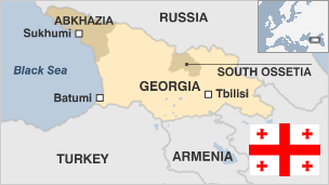
a CIS peacekeeping force of Russian troops is deployed in the Abkhazia region of Georgia together with a UN military observer group; a Russian peacekeeping battalion is deployed in South Ossetia
personnel 23,000 ... [97th of 170]
personnel > % of total labor force 1.02 % ... [82nd of 168]
Service age and obligation
18 to 34 years of age for compulsory and voluntary active duty military service; conscript service obligation - 18 months (2005)
Weapon holdings 377,000 [91st of 137]
WMD > Biological
Although Georgia is not a signatory to the Biological and Toxin Weapons Convention, there is no evidence to suggest that Tbilisi possesses or is developing biological weapons. During the Soviet era, some vaccine manufacturing facilities in Georgia that were part of the Soviet Anti-Plague system possessed dual-use biological weapons production capabilities. The Biokombinat facility, for example, manufactured vaccines for sheep pox, swine plague, and sheep brucellosis, but also doubled as a biological weapons research facility. Under the Nunn-Lugar program, dual-use biological weapons equipment has been dismantled and dangerous pathogens are slated to be housed in a new central pathogen storage facility.
WMD > Chemical
Georgia is a founding member of the Organization for the Prohibition of Chemical Weapons and a signatory to the Chemical Weapons Convention. There is no evidence to suggest that Georgia possesses or is pursuing chemical weapons.
WMD > Missile
Georgia subscribes to the International Code of Conduct against Ballistic Missile Proliferation and does not possess ballistic missile systems.
WMD > Nuclear
Georgia is home to three nuclear research institutes. The Andronikashvili Institute of Physics in Tbilisi houses a nonoperational IRT-M research reactor. All fresh and spent fuel was transferred from the reactor facility to Scotland in April 1998 under a multinational effort known as Operation Auburn Endeavor. The High Energy Physics Institute in Tbilisi is not known to house fissile material. The Sukhumi I. Vekua Institute of Physics & Technology (SIPT) was relocated from Sukhumi to Tbilisi due to the Abkhazian conflict. There are reports that SIPT once housed isotope production reactors and/or 2kg of 90% enriched uranium, though the whereabouts of the HEU is not known. Georgia is party to both the Nuclear Non-Proliferation Treaty and the Comprehensive Test Ban Treaty. In addition, on 6 June 2003, Georgia ratified an Additional Protocol to the NPT.
WMD > Overview
Independent for three years (1918-1921) following the Russian revolution, Georgia was forcibly incorporated into the USSR until the Soviet Union dissolved in 1991. As part of its Soviet legacy, Georgia possesses a decommissioned nuclear reactor and three nuclear research institutes, as well as a number of military bases contaminated with radioactive waste. Nonproliferation issues concerning Georgia stem primarily from the area of export controls. Georgia does not possess or produce nuclear, chemical, or biological weapons, but the country's industrial and medical sectors use components that could also be used in WMD systems.

... View all Military stats

SOURCES: IISS (International Institute for Strategic Studies). 2001. The Military Balance 2001-2002. Oxford: Oxford University Press; Office of the United Nations High Commissioner for Human Rights, Geneva, Switzerland, 1997. Data collected from the nations concerned, unless otherwise indicated. Acronyms: Amnesty International (AI); European Council of Conscripts Organizations (ECCO); Friends World Committee for Consultation (FWCC); International Helsinki Federation for Human Rights (IHFHR); National Interreligious Service Board for Conscientious Objectors (NISBCO); Service, Peace and Justice in Latin America (SERPAJ); War Resisters International (WRI); World Council of Churches (WCC); SIPRI (Stockholm International Peace Research Institute). 2005. SIPRI Arms Transfers. Database. February. Stockholm.; CIA World Factbook, 28 July 2005; Conventional Armed Forces in Europe (CFE): A Review and Update of Key Treaty Elements (US Department of State: Washington, DC, Jan. 2002). Joint Consultative Group (JCG), Group on Treaty Operation and Implementation, JCG document JCG.TOI/22/03, 23 June 2003; US Department of Defense. The Brookings Institution Iraq Index, April 24, 2006.; CIA World Factbook, December 2003; CIA World Factbook, 14 June, 2007 ; World Development Indicators database; Bonn International Center for Conversion (BICC); The Nuclear Threat Initiative

ALTERNATIVE NAMES: Georgia, Sak'art'velo

Related links:

More facts and figures on Georgia


COMMENTARY     


Share your thoughts, questions and commentary here
Your name
Your location
Your comments
Please enter the 5-letter protection code


Lesson Plans | Student Area | Student FAQ | Reviews | Press Releases |  Feeds | Contact
© Copyright NationMaster.com 2003-2008. All Rights Reserved. Usage implies agreement with terms.