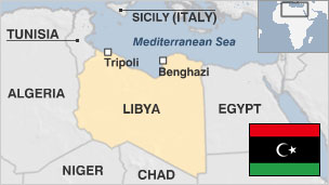
|
SEARCH ALL
|
FACTS & STATISTICS
|
|
Search encyclopedia, statistics and forums:
|
|
|
| LIBYAN ENVIRONMENT STATS: |
| Top Stats |
| | All Stats |
|
|
|
| |
|
|
... View all Environment stats
SOURCES: World Resources Institute; Carbon Dioxide Information Analysis Center; UNEP, Production and Consumption of Ozone Depleting Substances, 1986-1998, October 1999. via ciesin.org; World Resources Institute. 2003. Carbon Emissions from energy use and cement manufacturing, 1850 to 2000. Available on-line through the Climate Analysis Indicators Tool (CAIT) at Washington, DC: World Resources Institute; World Wide Fund for Nature (WWF), Living Planet Report 2000, Gland, Switzerland: 2000, and Redefining Progress.; Convention on International Trade in Endangered Species of Wild Fauna and Flora, Report on National Reports Required Under Article VIII, Paragraph 7(a), of the Convention, Eleventh Meeting of the Conference of the Parties, Gigiri, Kenya, April 2000; FAOSTAT on-line database; Intergovernmental Panel on Climate Change: Special Report on Emissions Scenarios, Data Version 1.1, B1Illustrative Marker Scenario with model IMAGE; Jacaranda Atlas; United Nations World Statistics Pocketbook and Statistical Yearbook; Center for Environmental Systems Research, University of Kassel, WaterGAP 2.1B, 2001 via ciesin.org; United Nations Environment Programme (UNEP), Global Environmental Monitoring System/Water Quality Monitoring System, with data for an additional 29 countries from Prescott-Allen, R. The Well being of Nations, Washington, DC: Island Press, 2001; World Development Indicators database; Wild Areas Project (WAP), joint Wildlife Conservation Society (WCS) and CIESIN project to map the lastwild places on the earth's surface. via ciesin.org
ALTERNATIVE NAMES:
Libya, Great Socialist People's Libyan Arab Jamahiriya, Al Jumahiriyah al Arabiyah al Libiyah ash Shabiyah al Ishtirakiyah al Uzma, libyan arab jamahiriya, the libyan arab jamahiriya
Related links:
More facts and figures on Libya
|