FACTOID # 7: Think Antarctica is inhospitable? Think again - its land area is only ninety-eight percent ice. Reassuringly, the other 2% is "barren rock".
 
 Home   Encyclopedia   Statistics   Countries A-Z   Flags   Maps   Education   Forum   FAQ   About 


WHAT'S NEW
 

SEARCH ALL

FACTS & STATISTICS    Advanced view

Search encyclopedia, statistics and forums:


(* = Graphable)


Middle East > Saudi Arabia > Geography

SAUDI GEOGRAPHY STATS:   Top Stats   All Stats  
View this page with:    Just Stats   Sources   Definitions   Both  
Area > Comparative
slightly more than one-fifth the size of the US
Area > Total 20 sq km [20th of 248]
Area > Water 186 sq km [186th of 237]
Capital city with population Riyadh - 4,700,000
Climate
harsh, dry desert with great temperature extremes
Coastline 49 km [49th of 249]
Elevation extremes > Highest point Jabal Sawda' 3,133 m
Forested Land 184% [184th of 193]
Geography > Note
extensive coastlines on Persian Gulf and Red Sea provide great leverage on shipping (especially crude oil) through Persian Gulf and Suez Canal
Irrigated land 29 sq km [29th of 185]
Largest city Riyadh
Largest city population 40 [40th of 174]
Largest city with population Riyadh - 4,700,000
Location
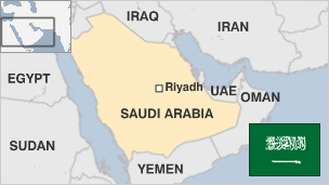
Middle East, bordering the Persian Gulf and the Red Sea, north of Yemen
Map references
Middle East
Maritime claims > Contiguous zone 74 nm [74th of 82]
Maritime claims > Continental shelf not specified
Natural resources
petroleum, natural gas, iron ore, gold, copper
Population density 201 people per sqkm [201st of 256]
Terrain
mostly uninhabited, sandy desert

... View all Geography stats

SOURCES: The area of various small countries expressed in comparison to various areas within the United States of America. ; Total area in square kilometers ; Total water area in square kilometers ; Capital cities including most recent population (estimates included). Populations are figures only within the city limits, unless otherwise specified. All populations are from 2001 t0 2005 unless otherwise specified.; A brief description of typical weather regimes throughout the year. ; The total length of the boundary between the land area (including islands) and the sea. ; Highest point above sea level ; Forested land as a proportion of total land area, estimate by FAO; This entry includes miscellaneous geographic information of significance not included elsewhere. ; The number of square kilometers of land area that is artificially supplied with water. ; The city with the highest population; The population of the country's largest city; Largest cities including most recent population (estimates included). Populations are figures only within the city limits, unless otherwise specified. All populations are from 2001 t0 2005 unless otherwise specified.; The country's regional location, neighboring countries, and adjacent bodies of water. ; The name of the CIA World Factbook reference map on which a country may be found. The entry on Geographic coordinates may be helpful in finding some smaller countries. ; Contiguous zone - according to the LOS Convention (Article 33), this is a zone contiguous to a coastal State's territorial sea, over which it may exercise the control necessary to: prevent infringement of its customs, fiscal, immigration, or sanitary laws and regulations within its territory or territorial sea; punish infringement of the above laws and regulations committed within its territory or territorial sea; the contiguous zone may not extend beyond 24 nautical miles from the baselines from which the breadth of the territorial sea is measured (e.g. the US has claimed a 12-mile contiguous zone in addition to its 12-mile territorial sea). A full and definitive definition can be found in the Law of the Sea (LOS) Convention. ; Continental shelf - the LOS Convention (Article 76) defines the continental shelf of a coastal State as comprising the seabed and subsoil of the submarine areas that extend beyond its territorial sea throughout the natural prolongation of its land territory to the outer edge of the continental margin, or to a distance of 200 nautical miles from the baselines from which the breadth of the territorial sea is measured where the outer edge of the continental margin does not extend up to that distance; the continental margin comprises the submerged prolongation of the landmass of the coastal State, and consists of the seabed and subsoil of the shelf, the slope and the rise; it does not include the deep ocean floor with its oceanic ridges or the subsoil thereof. A full and definitive definition can be found in the Law of the Sea (LOS) Convention. ; A country's mineral, petroleum, hydropower, and other resources of commercial importance. ; People per square kilometre, in 1999. At this time the world average was 14.42.; A brief description of the topography

ALTERNATIVE NAMES: Saudi Arabia, Kingdom of Saudi Arabia, Al Mamlakah al Arabiyah as Suudiyah, Al Arabiyah as Suudiyah , saudi arabia b, saudi-arabia

Related links:

More facts and figures on Saudi Arabia


COMMENTARY     

There are 1 more (non-authoritative) comments on this page

Share your thoughts, questions and commentary here
Your name
Your location
Your comments
Please enter the 5-letter protection code


Lesson Plans | Student Area | Student FAQ | Reviews | Press Releases |  Feeds | Contact
© Copyright NationMaster.com 2003-2008. All Rights Reserved. Usage implies agreement with terms.