|
|
Facts and figures
Dutch traders landed at the southern tip of modern day South Africa in 1652 and established a stopover point on the spice route between the Netherlands and the East, founding the city of Cape Town. After the British seized the Cape of Good Hope area in 1806, many of the Dutch settlers (the Boers) trekked north to found their own republics. The discovery of diamonds (1867) and gold (1886) spurred wealth and immigration and intensified the subjugation of the native inhabitants. The Boers resisted British encroachments but were defeated in the Boer War (1899-1902); however, the British and the Afrikaners, as the Boers became known, ruled together under the Union of South Africa. In 1948, the National Party was voted into power and instituted a policy of apartheid - the separate development of the races. The first multi-racial elections in 1994 brought an end to apartheid and ushered in black majority rule.
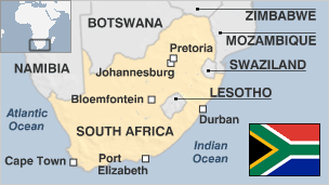
Botswana 1,840 km, Lesotho 909 km, Mozambique 491 km, Namibia 967 km, Swaziland 430 km, Zimbabwe 225 km |
|
48,782,756 |
$5,380.60 per capita |
|
Pretoria (official) - est. 1,000,000; Cape Town (legislative) - 2,893,251; Bloemfontein (judicial) - 369,568 |
Johannesburg - 3,225,812 |
Alternative names:
South Africa, Republic of South Africa, rep. of s. africa, , SAFRICA |
|
Top Rankings
|
Bottom Rankings
|
|
|
|
Maps of South Africa
|
Popular articles |
Lists and articles |
|
|