Facts and stats about Cuba

Author: Edsel.G
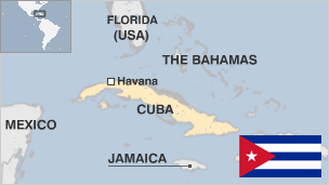
Cuba is an island off the coast of Central America, just below the United States. The capital of the country is Havana, with a population of more than 2 million (Cuba has an estimated population of 11 million as of 2012).
Before the discovery of the island by Christopher Columbus in 1492, sparse populations of Mesoamerican tribes thrived in the area. The arrival of the Spanish colonizers pushed many of the natives out, while thousands of African slaves were imported to the island by the Spaniards. Cuba remained in Spanish control until the Spanish-American War of 1898 which pushed the Spaniards out of the country and eventually led to the decline of its empire (and confirmed the status of the US as a global power).
The independence from Spain led to the instability in the country. Although there was substantial American support, the Cuban leadership failed to stabilize the economy and the society, leading to the ouster of the abusive president Fulgencio Batista and the installation of the socialist Fidel Castro. The Soviet-supported Castro caused one of the world’s most serious crises – the Cuban Missile Crisis – when he allowed the deployment of Soviet long- and medium-range nuclear ballistic missiles which could hit any target in the mainland US. The US was determined to prevent the delivery of said missiles, which nearly led to a nuclear confrontation between the navies of the USSR and the US.
Today, Cuba remains as a socialist country, along with China and North Korea. The economy has suffered greatly when the USSR, upon which Cuba depended for aid and trade, collapsed. Sanctions from the US continue to bite. However, the implementation of more market-oriented and less centralized policies have opened new opportunities for the country.
- Agriculture 122
- Background 10
- Conflict 5
- Cost of living 49
- Crime 33
- Culture 18
- Disasters 4
- Economy 1538
- Education 511
- Energy 923
- Environment 173
- Geography 84
- Government 98
- Health 304
- Import 1
11.06 million
Population. Ranked 77th in 2013.
$5,382.82
GDP per capita. Ranked 96th in 2008.
109,820 sq km
Sq. km. Ranked 97th in 2008.