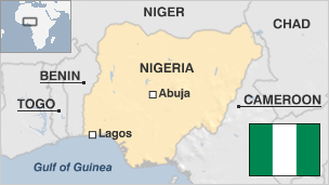
|
|
Facts and figures
British influence and control over what would become Nigeria grew through the 19th century. A series of constitutions after World War II granted Nigeria greater autonomy; independence came in 1960. Following nearly 16 years of military rule, a new constitution was adopted in 1999, and a peaceful transition to civilian government was completed. The government continues to face the daunting task of reforming a petroleum-based economy, whose revenues have been squandered through corruption and mismanagement, and institutionalizing democracy. In addition, Nigeria continues to experience longstanding ethnic and religious tensions. Although both the 2003 and 2007 presidential elections were marred by significant irregularities and violence, Nigeria is currently experiencing its longest period of civilian rule since independence. The general elections of April 2007 marked the first civilian-to-civilian transfer of power in the country's history.
Benin 773 km, Cameroon 1,690 km, Chad 87 km, Niger 1,497 km |
|
146,255,312 |
$792.31 per capita |
|
Abuja - 339,000 |
Lagos - (est. 10,000,000 to 15,000,000) |
Alternative names:
Nigeria, Federal Republic of Nigeria |
|
Top Rankings
|
Bottom Rankings
|
|
|
|
Maps of Nigeria
|
Popular articles |
Lists and articles |
|
|